8 Techniques for a Great Story

To write a great story, there are areas where you should focus on to make your story memorable. I’ve come up with eight examples of techniques that can help you get started. You can focus on one or two, or multiple techniques, depending on your writing skill level. The simplest way is to pick a situation to put your character in and then take a technique and work your character into it.

  1. Compelling Characters: Create characters with depth and complexity, each with their own motivations, flaws, and desires. Readers should be able to empathize with them and become invested in their journey.
  • Engaging Plot: Develop a well-paced and intriguing plot that keeps readers hooked from beginning to end. Include twists, turns, and moments of suspense to maintain their interest and drive the narrative forward.
  • Theme and Message: Infuse your story with a theme or message that resonates with readers on a deeper level. Whether it’s about love, redemption, or the human condition, a well-developed theme adds depth and meaning to your story.
  • Dialogue: Write authentic dialogue that reveals character traits, advances the plot, and enhances the overall storytelling experience. Each character should have a distinct voice, and conversations should feel natural and dynamic.
  • Conflict and Tension: Introduce conflict early on and escalate it throughout the story to keep readers engaged. Whether it’s internal struggles, interpersonal conflicts, or external challenges, tension drives the plot forward and keeps readers invested in the outcome.
  • Vivid Description: Use descriptive language to paint vivid images in the reader’s mind, bringing the setting to life and immersing them in the story’s world. Show, don’t tell, by using sensory details to evoke emotions and create a sensory experience for the reader.
  • Foreshadowing and Symbolism: Incorporate foreshadowing and symbolism to add layers of meaning to your story and create a sense of anticipation in readers. Plant clues and hints early on that pay off later in the narrative, and use symbols to reinforce themes and motifs.
  • Satisfying Resolution: Provide a satisfying resolution that ties up loose ends and provides closure for the reader. Whether it’s a happy ending, a bittersweet conclusion, or a cliffhanger that sets up a sequel, the resolution should leave readers feeling fulfilled and satisfied with the journey they’ve taken.

Let me know if you try any or all of these. I’d be thrilled to read what you’ve written.

(Image purchased from Depositphotos and edited in Photoshop.)

10 Creative Prompts to Get You Writing

Let’s have some fun and write stories with these prompts. Pick one, or two, or all of them, and just write. Feel free to share them with me. Just contact me here and I’ll share your stories, if you want.

  1. Museum Mystery:
    • Start or end your story with a character who gets trapped inside a museum overnight. What secrets lie hidden among the artifacts? Is there a ghostly curator guiding them?
  2. Art Heist Romance:
    • Write about an art thief who is struggling to commit the perfect heist. Along the way, they encounter a fellow art enthusiast—someone who might just steal their heart instead.
  3. Living Paintings:
    • Imagine a gallery where paintings come alive at night. What adventures await the characters as they step into these enchanted canvases?
  4. Betrayal and Betrayed:
    • Begin your story with an unexpected betrayal. How does the betrayed character seek revenge or redemption? What secrets unravel in the aftermath?
  5. Lighthouse in the Storm:
    • Set your story in a lighthouse surrounded by powerful gale-force winds. Who tends the light, and what storms—both literal and metaphorical—do they face?
  6. Whispers on the Wind:
    • Craft a tale where a crumpled piece of paper, carrying an unexpected message, is carried by the wind. Where did it come from, and where is it going?
  7. Magical Artistry:
    • Write about an artist whose work has magical properties. Can their paintings heal, transport, or reveal hidden truths?
  8. Endless Road:
    • Your character embarks on a journey down a road that has no end. What awaits them at the horizon? Is it a physical or metaphorical path?
  9. Dissolving Reality:
    • The laws of time and space begin to dissolve. How does this affect your characters’ lives? Are they slipping between dimensions?
  10. Sentient Household Item:
    • A regular household item becomes sentient. What does it experience? Does it have desires, fears, or memories?

First Edit Update on Fantasy Novel TLS

It’s been some time since I’ve worked on my fantasy novel. I’ll call it, TLS for now. Reason being, I graduated this past May (the 5th) with my Master’s of Arts in creative writing. My capstone project was to finish my fantasy story, this TLS one, and I did. It was an intense ride and so after I graduated, I took a week to relax. Out from relaxation, I started the first round of editing. It’s been a slow start.

It hasn’t been easy getting back into the mood of TLS. Last week, I spent about four days writing Aeva, the sci-fi outer space novella. Aeva was just in my head. Yesterday, after reading a book by George R.R. Martin, I had the urge to write TLS so I dug in and cleaned up a little bit of dialogue.

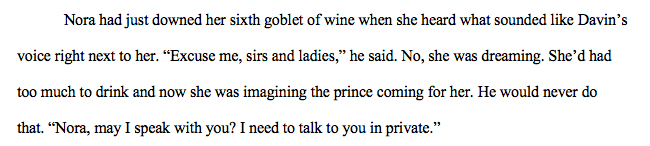
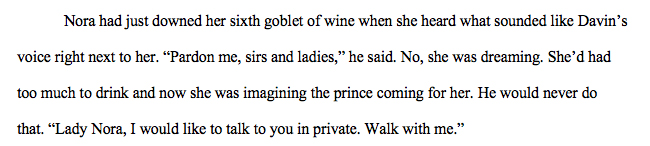
Here’s the original:

firstedit_silvers_orig

And, here’s the edited:

firstedit_silvers_edited

I’m happy with the changes but nothing is permanent yet. This is only the first edit.

Tips for New Writers

Many years ago, when I was a young writer, I never really worried about how to word things or where to begin writing.  I just went at it with my intuition, jotting emotions down, jotting how I heard conversations happened in my head, etc.  I had an urge to get those thoughts out on paper.  Personally, I had a thing for the written English language (if the English language was a handsome man, I’d be all over him) so I naturally paid attention in all my English classes. I also read a lot, and still do – a lot more than I did then.

I’ve noticed nowadays that a lot of new writers, who don’t have any experience in writing, worry that they won’t be able to write because they don’t know how to do it right or where to begin.  It doesn’t take an expert to explain what it takes to be a beginner writer, just someone who’s done it a ton.

Here are my tips on how to start.  Now, you won’t become a famous writer/author right away, or maybe ever because of these tips.  These are simply stepping stones to get you comfortable enough to put pen to paper (or fingers to keyboard) and make sense out of it.

Tip 1: Read. Read whatever you want, but read.  Preferably, read in your genre because it will help you think the way you need to think to write your stories.  When you read, watch for syntax, verbiage, sentence structure, etc.  Pay attention to how the author starts a chapter or a paragraph. I’d recommend throwing in a few classics just for variations.

Tip 2: In grade school, we were all taught the elements of a story.  It still applies.

The 5 Basic Elements of a story:

  1. Exposition – the introduction: setting of the story and characters.
  2. Rising Action – events that lead to the climax.
  3. Climax – the highest point of the action; the crisis.
  4. Falling Action – the events after the crisis.
  5. Denouement – the tying together of loose ends; the resolution.

Tip 3: Have a conflict in your story.  Being new, you should only focus on one conflict. Don’t worry about the different types of conflicts out there, it could confuse you more.  Just think of one thing that you feel can be resolved in your story.

Tip 4. Write.  Tell your story without it being perfect.  Let it spill out with all its imperfections.  Don’t worry about grammar.  DO worry about formatting.  It will help you read you own work easier in the long run.  This is the very basic way to format:

  1. Double space.
  2. Use 12-point font size and Times New Roman for the typeface.
  3. Indent for new paragraphs.
  4. Indent dialogue each time a different character is speaking.

Tip 5: Practice on short pieces.  Even if you have a long story playing in your mind, write out just the parts that are strongest.  Don’t try to get the story down in order.  Use place holders or chapters (with short outlines) for those pieces you have yet to flesh out completely.

That’s it!  Now, get to writing.